


Pennsylvania — A Dining Table Built Around a Single Structural Idea
Updated: May 2
Year: June of 2012
Project: Pennsylvania Dining Table (Entry into the Riva1920 Design Contest)
Material: Black Walnut
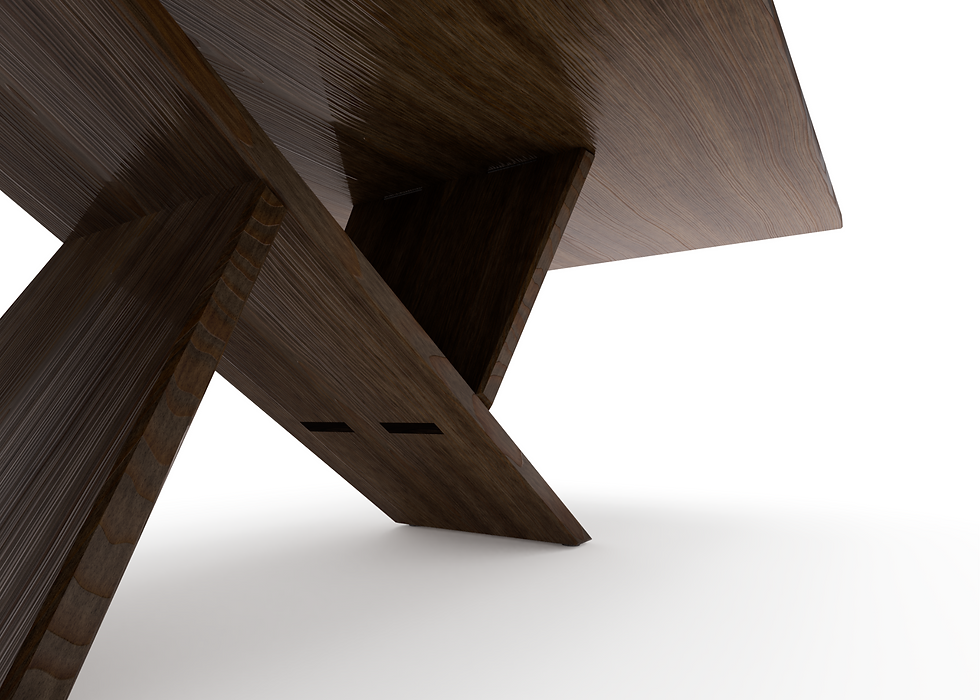
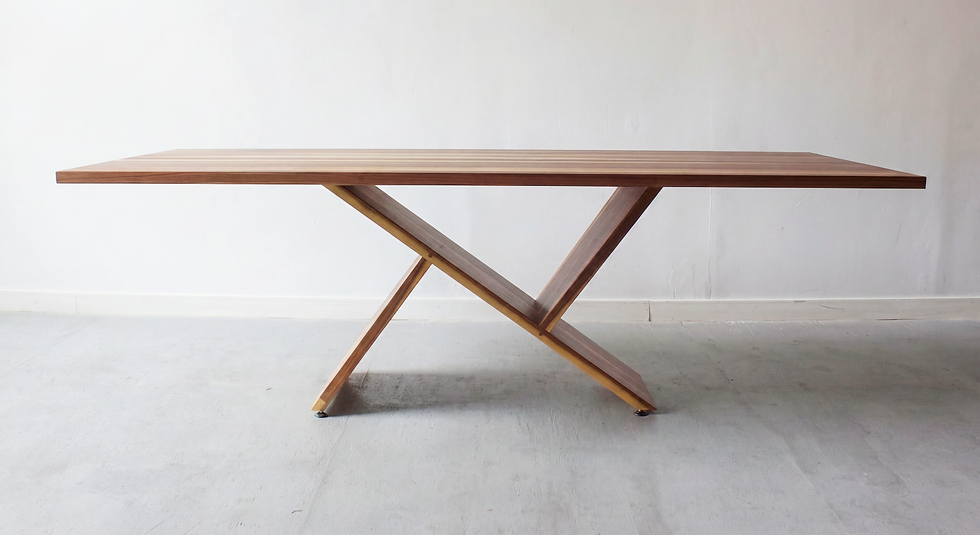
The Pennsylvania is built around a single structural idea: a diagonal beam, hand-fitted with mortise and tenon joints, that resolves into a central base. Four joints, four dowels, no tools required. The geometry is balanced and intentional — the diagonal does the work visually and structurally at once.
The joinery is hand-cut. That distinction matters. Mortise and tenon cut by hand fits differently than machined joinery — the surfaces seat fully, the connection is tight, and the craft is visible in the result. It is one of the oldest structural techniques in woodworking, used here without apology and without ornament.

The central base keeps the footprint minimal and the floor unobstructed — no legs at the corners, nothing to navigate around. The table reads as light despite being solid hardwood throughout.

Assembly and disassembly require no tools, which makes the Pennsylvania practical for spaces that need flexibility without sacrificing permanence of feel. When it is assembled, it does not feel like flat-pack furniture. It feels like a table that was built to last.
Available in a selection of hardwoods through the co-design process.


Comments