


The Original 2012 Azuza Design Collection
- May 2
- 2 min read
The drawings preceded the workshop by two years. Furniture sketches started at twenty, and in 2012, with tools and space to work, the collection was built. Five pieces, each resolving a different structural or material question.
Integra Dining Table: The concrete was my father's — a proprietary mix of polymers and fibres he had developed under the name IntegraStone for outdoor living surfaces. Dense, travertine-like, and purpose-engineered. It was ultra-high performance concrete applied to furniture before the category had a name.

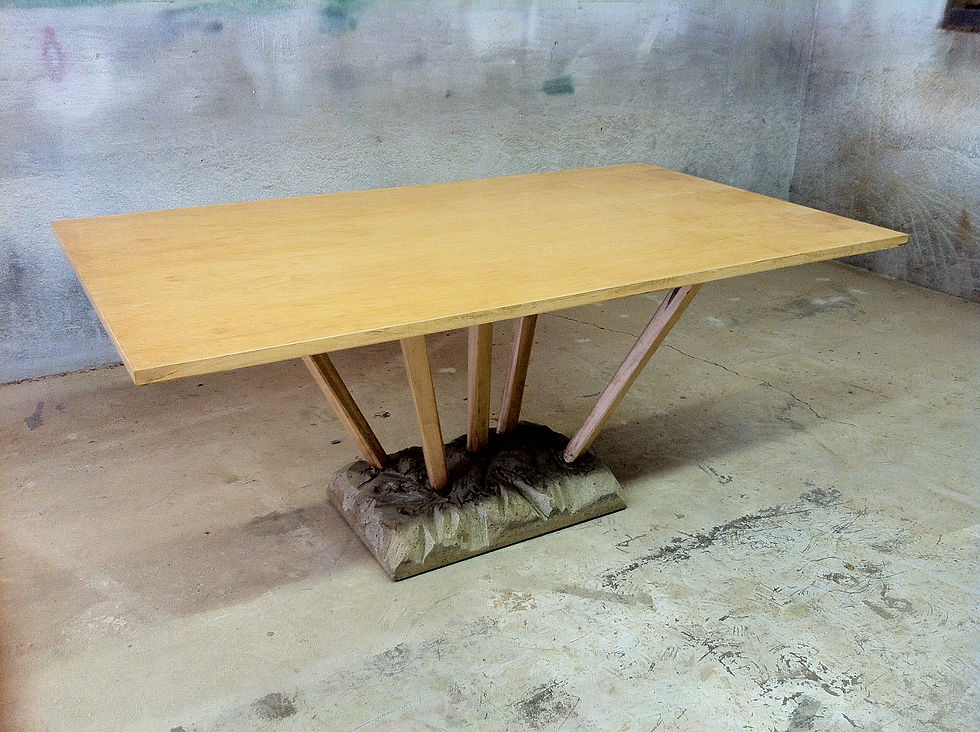
Polonaise Coffee Table: Built in collaboration with my brother Mark, who had just completed his apprenticeship under FuTung Cheng, the decorative concrete designer based in Berkeley, California. Commissioned as a centrepiece for a local coffee shop. Five thick-cut solid maple legs were set in position and UHP concrete cast around them — the legs cast in, then dowelled into the underside of the top. Stable, dynamic, material and structure working as one.
Mark's work can be found at Marked by Adventure.

Five thick-cut solid maple legs, positioned and cast into UHP concrete. The legs are structural and compositional at once — their placement determining both the stability of the base and the visual rhythm of the piece. Once set, they were dowelled into the underside of the top, tying the two materials into a single form.
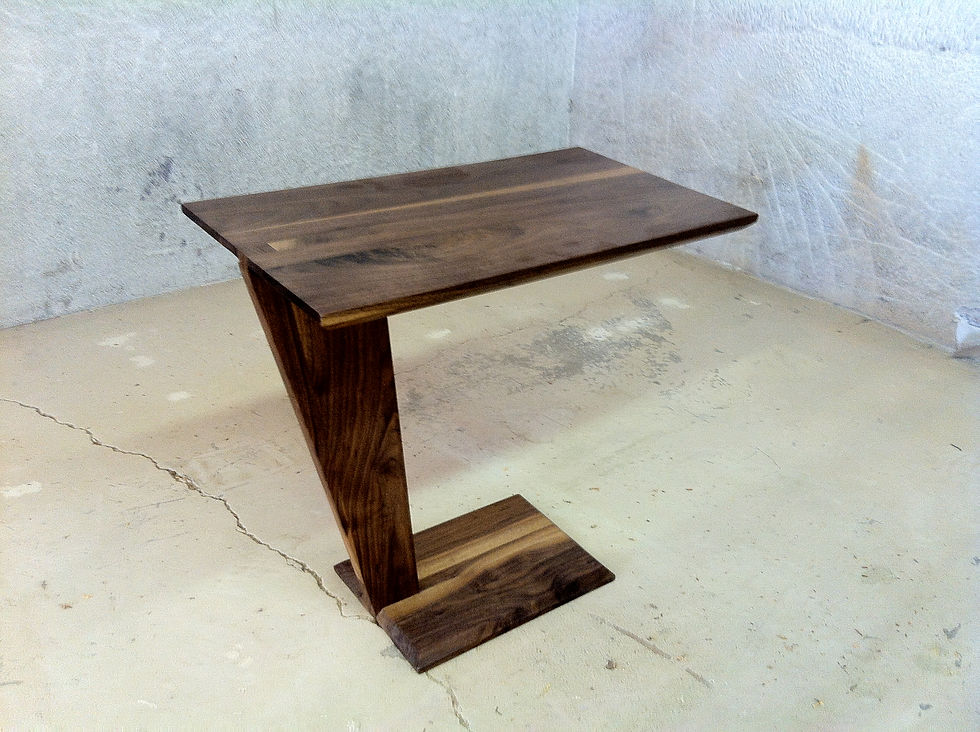
The first design I had, dating back to 2009, was this side table, that used one vertically tapered leg to support and flat base and fully cantilevered tabletop. The method of construction was built around this single leg and each piece was builts around it, gluing each piece side by side to create a monolithic sculptural form and a strikingly slim profile.
Pyramid Bistro Table: A cast pyramidic base acting as ballast. Mark built the mold — clean edges, exact angles, consistent dimensions. Precision that proved necessary: a local restaurant commissioned twelve shortly after, making a reliable mold essential for production.

Mortise Dining Chair: Cut from offcuts — walnut and mahogany left from other jobs. The brief was self-imposed: no fasteners. Four mortise and tenon joints per leg, seven dowels connecting the frame to the seat and backrest. The seat and backrest carry the lateral load, giving structural integrity to a minimal number of parts. The design logic was partially informed by Gerrit Rietveld.
Six of these chairs were later commissioned for Kit and Ace Calgary. Eight more for a residential home.

This collection established the material thinking that still runs through the work — hardwood and concrete, joinery as expression, form arrived at through constraint.


Comments